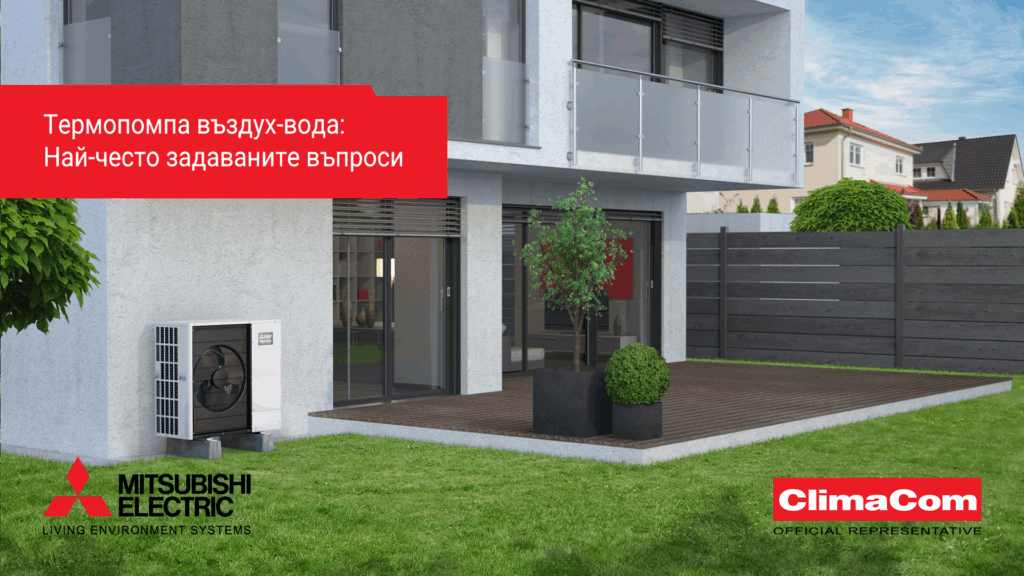
Air-to-water heat pumps are rightly considered the future of sustainable heating—but this is far from the only reason why more and more people are choosing them.
Over the past ten years alone, hundreds of thousands of systems of this type have been installed. Nevertheless, for many people the topic remains unfamiliar: few are aware that heat pumps can simultaneously reduce energy costs and protect the environment.
For this reason, we have compiled the 9 most frequently asked questions to help you understand how they work and whether they are suitable for your home.
“You have been using a heat pump for decades—without even realizing it.”
1. What is a heat pump?
You may not realize it, but you are likely already using a heat pump at home—for example, in your refrigerator. It removes heat to the outside in order to maintain a low internal temperature.
A heat pump operates on the same principle, but in reverse—it “captures” thermal energy from the surrounding environment (air, ground, or water) and transfers it into your home to provide space heating and domestic hot water. All of this is achieved through the well-known vapor compression cycle—the same cycle used by your refrigerator.
Heat pumps are a flexible, environmentally friendly, and highly efficient solution for year-round comfort.
2. What is an air-to-water heat pump?
An air-to-water heat pump is a system with an outdoor unit that uses a fan to draw in ambient air, which passes through a heat exchanger containing refrigerant, from which heat is extracted. Clean, energy-efficient, and sustainable.
3. What are the advantages of Ecodan air-to-water heat pump systems?
- They are suitable for both new-build projects and renovated buildings with high energy efficiency.
- A replacement for traditional wood-, pellet-, or gas-fired boilers, but with two key advantages:
- High energy efficiency – Ecodan uses up to 75% of its energy directly from the air and only 25% from the electrical grid, providing reliable space heating, underfloor heating, and domestic hot water.
- Year-round comfort – the system is available in two configurations: heating and cooling, or heating only.
The system can be combined with radiators, underfloor heating, hydronic indoor units, or a domestic hot water storage tank.
4. How much does it cost to install a heat pump system?
The costs depend on factors such as the age and size of the property, insulation levels and overall energy efficiency, the number of rooms and radiators, and other variables; therefore, the price is individual for each project.
The best solution is to contact one of our specialists or an authorised partner to receive a tailored quotation.
5. How long does the installation take?
- For new buildings, installation typically takes a few days.
- For renovation projects, the timeframe depends on the specific conditions—such as whether radiators need to be replaced, where the outdoor unit will be installed, and whether the existing system will be reused or a completely new system will be implemented.
6. How does the system operate at sub-zero temperatures?
Ecodan systems maintain high efficiency at temperatures down to −25°C (when using R32 refrigerant).
Models equipped with Zubadan technology deliver excellent heating capacity even at extreme temperatures down to −30°C (when using R32 refrigerant), ensuring reliable home comfort even on the coldest days.
7. Are heat pumps noisy?
Noise levels vary depending on the model and are specified in the technical documentation—typically ranging from 43 to 62 dB(A).
Mitsubishi Electric outdoor units are among the quietest in their class, making them suitable even for residential areas with strict low-noise requirements.
8. Can the heat pump be controlled remotely?
Yes – Ecodan systems feature smart control via the MELCloud app, giving you access from anywhere—whether you’re on the sofa, at the office, or even by the pool.
You can monitor energy consumption, analyse data, and adjust the system according to your needs for maximum efficiency.
9. How long does a system like this typically last?
For a long service life, it is essential that the heat pump is correctly sized in terms of capacity and that the appropriate components are selected for the specific system.
In conclusion
Air-to-water heat pumps are a proven sustainable solution that is now becoming the standard for efficient heating and cooling. Understanding their key operating principles and advantages is the first step toward making an informed decision that will ensure long-term comfort, lower energy bills, and a reduced carbon footprint.
If you are looking for a reliable and energy-efficient solution, contact our team to find out whether an Ecodan heat pump is the right choice for your home. Together, we can plan a sustainable and intelligent heating system tailored to your needs.
Source:
Mitsubishi Electric UK: Top 10 #FAQ about air source heat pumps

Follow us on social media to discover interesting, up-to-date, and useful information.